

Saudi Arabia’s ambitious growth strategy and diverse terrain call for versatile, rugged, and reliable vehicles. Utility Task Vehicles (UTVs) have emerged as indispensable tools across various sectors, from massive construction projects and modern farms to the endless stretches of desert. Their adaptability, performance, and efficiency have made them must-have machines for companies and individuals who work in demanding conditions.
This detailed article explores the top uses of UTVs across construction sites, agricultural lands, and desert regions in Saudi Arabia, highlighting real-world applications, benefits, and future prospects.
Understanding UTVs and Why They Matter in Saudi Arabia
Utility Task Vehicles are compact off-road vehicles designed to perform a wide range of functional tasks. Unlike ordinary cars or trucks, UTVs are built for heavy use, tough terrain, and repeated workload patterns.
Saudi Arabia’s climate and geography make traditional transportation challenging. Its wide infrastructure projects, expanding agricultural initiatives, and tourism in desert areas demand specialized mobility solutions. This is where UTVs have quickly proven their worth.
UTVs on Construction Sites: Powering Progress
Supporting Large-Scale Infrastructure Advancement
Saudi Arabia’s development under national plans has seen unprecedented investment in highways, urban projects, facilities, and smart communities. Construction zones often span multiple square kilometers with workers, materials, and tools needing rapid movement across challenging terrain.
UTVs fill this gap perfectly. They offer:
- Reliable transport for engineers and foremen
- Effective distribution of tools, parts, and equipment
- Flexible navigation across spotty ground and unfinished infrastructure
Many contractors at sites in Riyadh, Jeddah, and Dammam rely on these vehicles to maintain daily operations smoothly, especially where roads are yet to be established.
Increasing Worker Efficiency and Site Mobility
Time is a crucial factor on construction projects. Walking long distances or using heavy trucks for short hops slows down progress. UTVs bridge this gap by offering:
- Quick transit between site sections
- Platforms to carry construction materials
- Seating for small teams during supervision rounds
This mobility directly contributes to faster task completion, reducing delays and improving onsite coordination.
Enhancing Safety and Inspection Quality
Construction environments can be hazardous, with uneven ground, shifting loads, and ongoing heavy machinery work. UTVs help safety supervisors and site managers access remote positions quickly to perform:
- Daily inspections
- Emergency response actions
- Safety equipment transport
Their design incorporates safety features such as strong frames, guards, and visibility improvements—ensuring that inspections and patrols are completed with minimal risk.
Supporting Material and Equipment Delivery
From compact tools to heavy equipment, construction logistics are critical. UTVs serve as reliable carriers within job zones where larger trucks may struggle:
- Delivering tools to crews faster
- Transporting replacement parts
- Moving materials like pipes, fittings, or small building supplies
This sort of internal logistics capability saves time and manpower, especially on sprawling project sites where every minute matters.
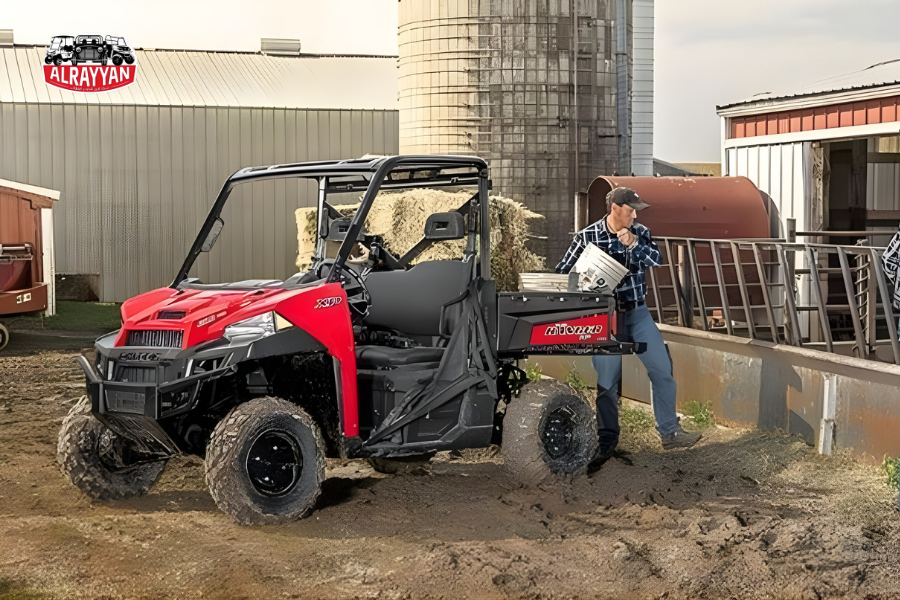
UTVs in Agriculture: Cultivating Efficiency
Agricultural Growth Challenges in Saudi Arabia
Modern farming in Saudi Arabia has evolved dramatically. With desert terrain dominating much of the country, innovative irrigation systems and farming technologies are required. Agriculture is now a mix of modern mechanization and precision work, and mobility plays a crucial role.
UTVs have quickly become a staple on medium and large farms, helping farmers meet daily operational needs.
Daily Farm Operations Made Simple
Farmers and laborers use UTVs for a variety of routine tasks, such as:
- Moving harvested crops from fields
- Transporting irrigation equipment
- Carrying fertilizer and seed supplies
- Transferring tools to distant plots
The ability to navigate across soft soil, uneven ground, and sandy stretches makes these vehicles more practical than traditional petroleum-powered farm trucks.
Supporting Livestock Management
Farmers who maintain livestock find that traditional vehicles can be too large or cumbersome for spotting animals across wide stretches of pasture. UTVs enable more efficient animal monitoring, feeding, and movement, helping:
- Transport feed and water quickly
- Move healthcare tools and supplies to animals
- Traverse between paddocks with ease
They are also valuable during seasonal shifts and livestock inspection routines.
Reducing Job Fatigue and Labor Costs
An essential advantage of using UTVs is the reduction in physical strain on farm laborers. Tasks that once required multiple workers can now be accomplished by a smaller team with a UTV carrying gear and produce. This results in:
- Lower fuel costs versus larger vehicles
- Reduced labor expense for the same output
- Increased employee satisfaction
This blend of affordability and productivity makes UTVs a practical choice for farms of all sizes.
UTVs in Desert Areas: Mastering Harsh Terrain
Navigating Saudi Arabia’s Vast Desert Landscapes
Saudi Arabia’s desert regions are characterized by high temperatures, soft sand, and endless horizons. Ordinary vehicles struggle in such environments, and standard tires often sink or overheat.
UTVs, however, are built to thrive in these conditions. With wider tires, specialized suspension systems, and robust engines, they deliver:
- Stable performance on soft sand
- Capability to traverse up dunes and rocky patches
- Lower risk of getting stuck due to optimized design
This makes them ideal companions for various activities in desert territories.
Security and Patrol Functions
Many agencies and private companies operate in remote desert areas—whether for protecting infrastructure, oil pipelines, or border monitoring. UTVs are often deployed due to their:
- Fast transit speed
- Ability to reach remote locations
- Capacity to carry patrol equipment and communication gear
Their agility allows officers and guards to cover more ground with minimal logistical support.
Supporting Energy Sector Operations
Saudi Arabia’s oil and gas fields are not always located near paved roads. Regular access, maintenance, and inspection work deep in desert fields requires dependable mobility.
UTVs help energy sector personnel:
- Check on isolated rigs and pipelines
- Transport tools and parts
- Move technicians between stations efficiently
This use has grown steadily as companies seek cost-effective and adaptable onsite mobility.
Desert Tourism and Recreational Safaris
Tourism initiatives have expanded desert experiences for residents and visitors alike. UTVs play a big role in leading desert excursions, offering:
- Comfortable and safe rides across dunes
- Adventure experiences for tourists
- Easy access for tour guides to varied terrain
Their lightweight frame and responsive handling make them ideal for controlled thrill excursions without compromising safety.
Key Benefits of UTVs in Saudi Arabia
Why have these vehicles gained so much traction? The answer lies in their unique capacity to blend performance, flexibility, and low operational overhead.
Built for Extreme Climates
Saudi Arabia faces intense heat and rising temperatures, especially during long summers. UTVs are engineered with cooling systems and rugged components that function reliably in such conditions, reducing breakdowns and ensuring consistent performance.
Adaptable Across Multiple Sectors
From heavy-duty support on construction sites to agricultural chores and desert outings, these vehicles demonstrate true versatility. They can be customized with accessories, racks, cargo beds, enclosed cabins, and safety gear, matching the exact needs of operators in each industry.
Cost-Effective Operation and Maintenance
Compared to larger vehicles, UTVs use less fuel, require simpler maintenance, and cost less to insure and operate. For businesses at Alrayyan and beyond, this means better returns on investment—without sacrificing reliability.
Enhanced Safety and Worker Comfort
UTVs provide cabin structures and protective frames that reduce risk during job site transportation or rough terrain crossing. Workers can cover long distances with less fatigue, promoting safer work environments.
How to Select the Right UTV for Saudi Conditions
Choosing the right UTV involves matching machine capabilities with intended use. Important considerations include:
- Terrain requirements: soft sand, rugged soil, uneven ground
- Load capacity: how much cargo or passengers need to be carried
- Engine performance: horsepower and cooling system strength
- Features: storage space, roof protection, comfort seating
- After-sales support: service network availability
For heavy desert travel, models with greater torque and wide tires are often recommended. For farms, balanced machines with practical storage and towing capabilities are ideal. On construction sites, durability and safety features hold top priority.
Future Prospects and Adoption Trends
As Saudi Arabia continues investing in construction, agriculture modernization, and tourism, the demand for robust, versatile utility machines is expected to grow. UTVs are not just tools—they are becoming a strategic asset for efficiency, productivity, and safety.
At Alrayyan, we see this trend firsthand. Industry professionals increasingly choose UTVs for their multipurpose value and long-term operational benefits.
Conclusion
Utility Task Vehicles have transformed how work gets done in Saudi Arabia’s most challenging environments. Whether for transporting workers on a busy construction site, moving supplies across farmland, or navigating the endless sands of the desert, UTVs deliver practicality and performance that traditional vehicles cannot.
Their resilience, adaptability, and cost-efficiency make them an investment that continues to pay dividends across industries. As Saudi Arabia develops further, these vehicles will remain a dependable backbone of daily operations—ensuring productivity and agility wherever they are deployed.



 have emerged as indispensable tools across various sectors, from massive construction projects and modern farms to the endless stretches of desert. Their adaptability, performance, and efficiency have made them must-have machines for companies and individuals who […])